Štrigon – a sparkling wine between Istria, people and myth
Strigon Istrian sparkling wine was not created as a planned project, but as a spontaneous connection between wine, people and Istrian mythology. More than eighteen years have passed since Livio Jakomin and the late Zvest Apollonio asked me to prepare a sparkling wine for a special occasion. And I did.
The vintage was 2006, made from Malvasia and Muscat, fifty–fifty. Eighty bottles in total. Sixty were opened at the event, twenty remained. I believe there is still one somewhere in my cellar, lying in a metal crate, waiting for its moment.
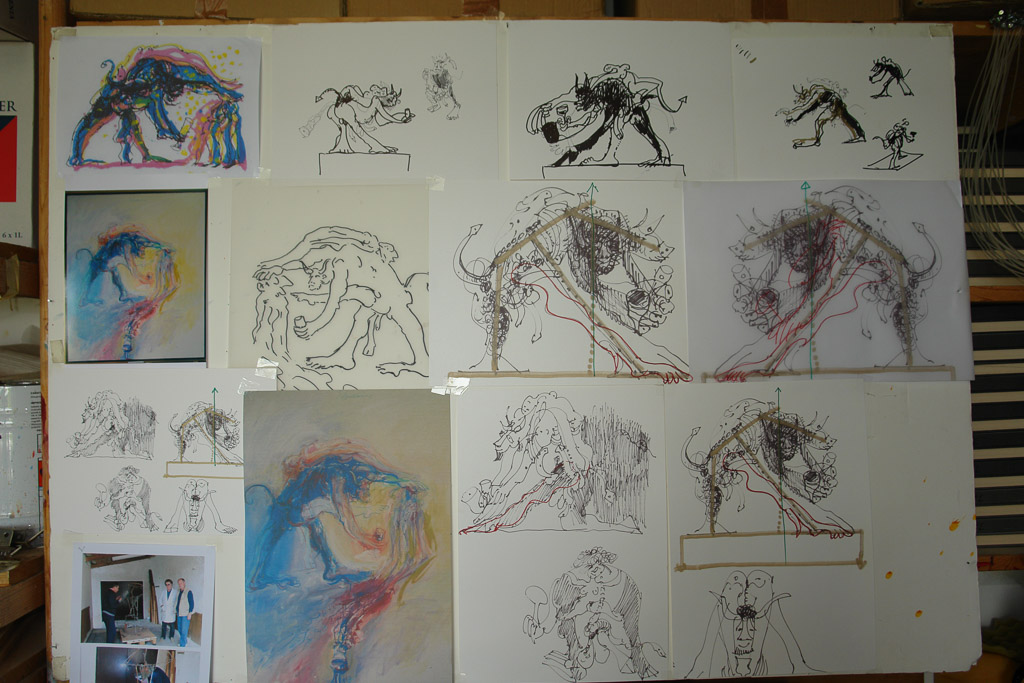
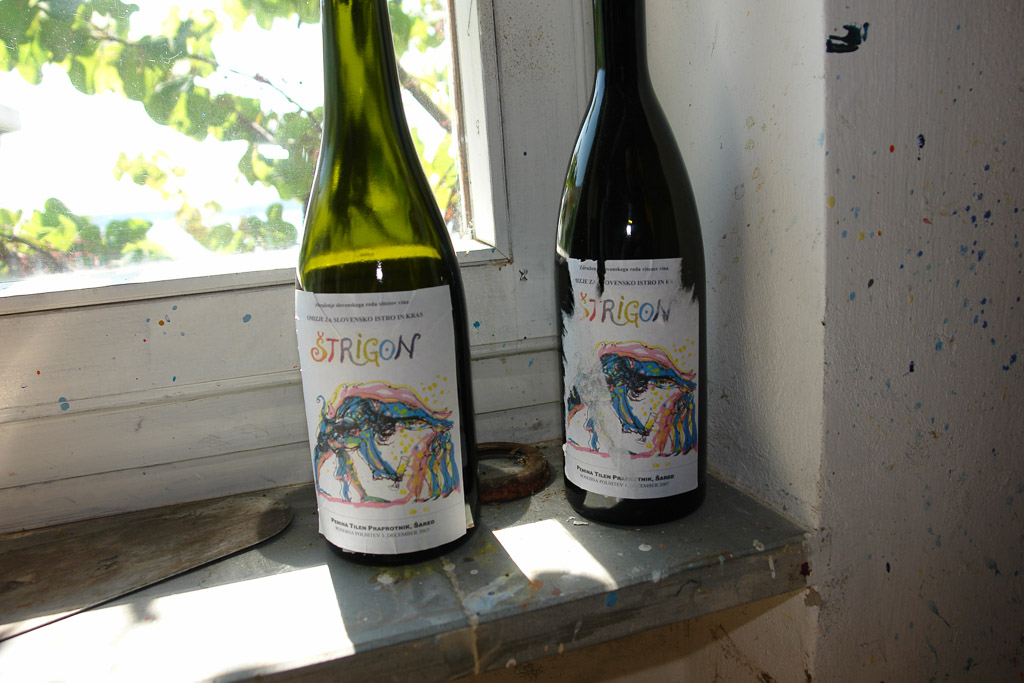
I made the wine. Zvest designed the label and gave the wine its name – Štrigon.
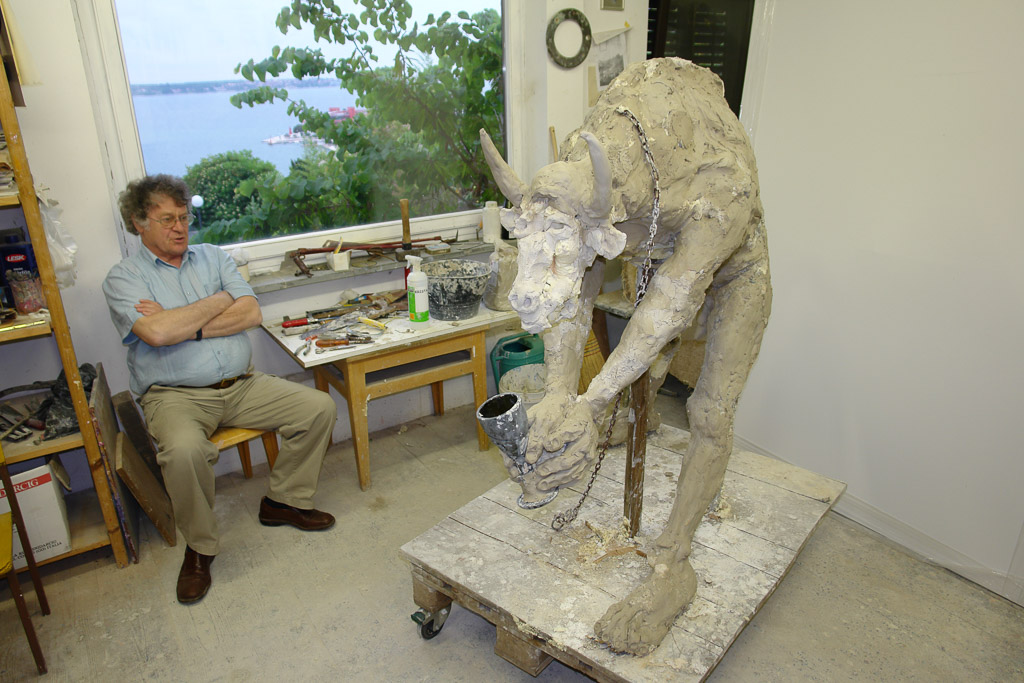
The name felt meaningful. Perhaps spontaneous for him, as he was already working on the idea of a sculpture of Štrigon at the time – a sculpture he would bring to life just over a year later. I found both the drawing and the name extraordinary, so shortly after the event I asked Zvest if I might use his illustration for my own sparkling wine, should I ever make one.
The first Štrigon
There was no need to wait long.
With the 2010 vintage, I intended to release the first rosé from our cellar. However, the acidity was too pronounced for my taste. That imperfection gave rise to a new idea: perhaps this wine could become my first sparkling wine.
And so the first – or rather, the second – Štrigon was born.
Štrigon in Istrian mythology
Štrigon is a figure from Istrian folklore.
Some describe him as half ox, half man. Others see a goat in human form. Still others remember him as a wanderer, a trickster, a strange magician roaming the hills of Šavrini, stirring mischief.
In Istrian tradition, Štrigon is not a monster.
He is not merely a fairy-tale creature, nor someone spoken of openly. He belongs to the margins – a bearer of something people cannot fully explain.
It was said he had heavy eyes. That the earth reacted differently where he walked. That sometimes things happened without a clear reason.
Štrigon was not necessarily evil. But he was a convenient explanation when a harvest failed, when wine took an unexpected path, when nature showed its teeth too quickly, or when something simply happened.
In stories passed down through the Šavrini hills, he sometimes took on another form – half man, half animal. Some saw a goat, others an ox. These were not descriptions of a creature, but ways of giving shape to fear. Sometimes, a human alone was not enough.
Why a sparkling wine
This duality – between earth and the unspoken, between the human and the unexplainable – felt right for a sparkling wine.
Because wine is never only the result of control and knowledge. There is always a space where nature has the final word.
That is why every Štrigon is slightly different.
And yes – not everyone feels Štrigon.
Three Štrigons (and perhaps another)
The 2010 vintage was accidental, unplanned.
That is why it is different: higher in alcohol, brut, even though no dosage was added. The bubbles are finer and fewer, as the few grams of sugar from the secondary fermentation did not fully ferment – most likely due to the higher alcohol.
Then came the 2021 vintage, planned and intentional, made from two varieties: Refosco and Syrah. A rosé, yet more intense. Disgorged as needed. Fresh fruit, lively acidity, and an easy, drinkable character.
There is also a pét-nat from 2021, made from old Istrian white varieties. Only a few bottles remain.
And somewhere in the cellar, there is another.
Something in between.
And perhaps another will come – if nature allows it.
Each release of Strigon Istrian sparkling wine reflects a different moment, vintage and expression of nature.
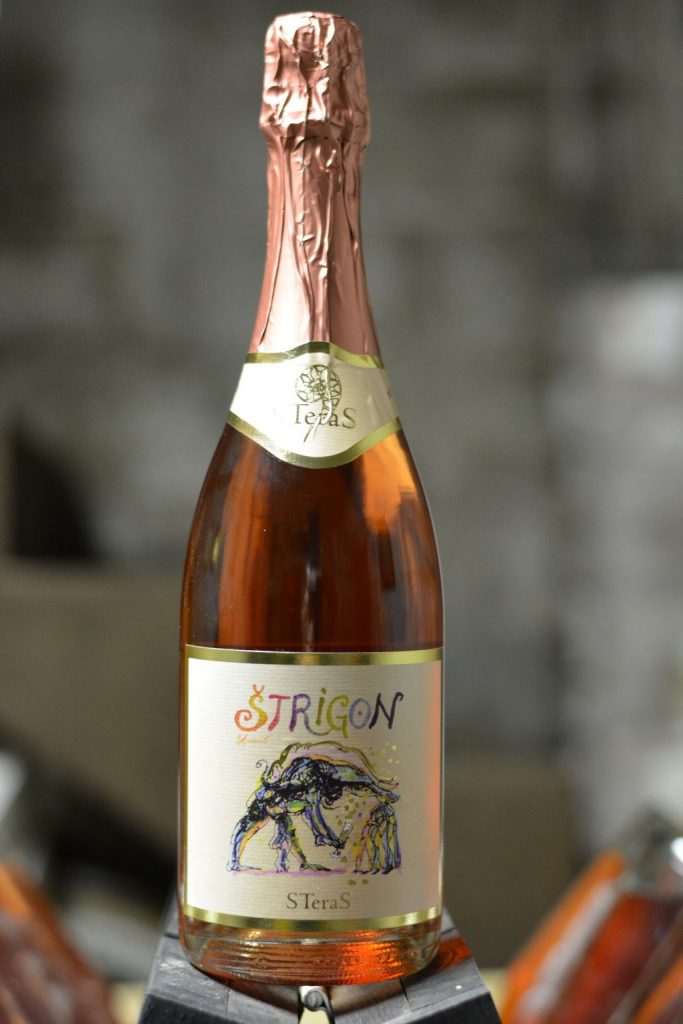
Today, Štrigon is no longer just a sparkling wine.
It is a story that returns every time a bottle is opened. It does not repeat itself, does not follow rules, and does not come into being on a schedule. As in Istrian tradition, something elusive remains in the wine – something to be experienced rather than explained.
And perhaps that is why Štrigon is meant for those who seek more than flavour in wine: a sense of place, time, and moment.
0 Comments